If you’ve been in physical therapy for months and you’re still doing clamshells… you’re probably not getting the strength and stability you actually need.
Clamshells aren’t bad — they have a place early in rehab — but they quickly reach a point of diminishing returns. You can feel the burn, you can feel the muscles working, but they don’t translate well to real-life movement, running, jumping, or lifting.
If your goal is to rebuild function, clamshells alone won’t get you there.
Here are the three exercises every patient should progress to once symptoms calm down and activation is established and why they matter so much more for long-term hip, knee, and low-back resilience.
Why Clamshells Are Not Enough
Clamshells serve a purpose when:
-
You’re early post-injury
-
You need gentle activation
-
You’re calming symptoms
-
You’re retraining the brain to find the glutes again
But after a few weeks, your body adapts. Clamshells become too easy, too isolated, and too far removed from how your hips actually work during functional movement.
Your hips don’t need more burning reps lying on your side. They need real load, real stability, and real coordination.
That’s where the next three exercises come in.
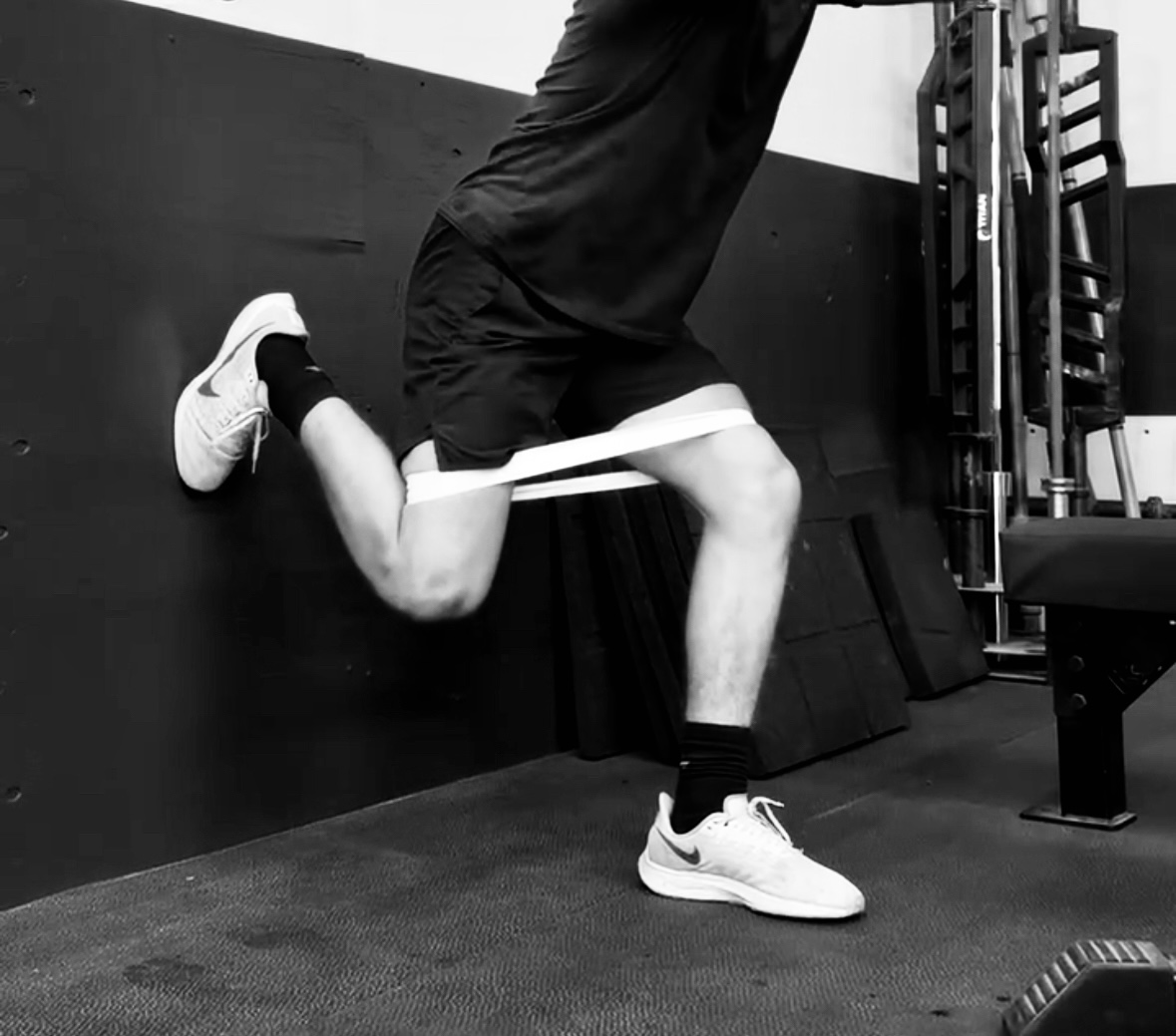
1. Standing Hydrants: The Missing Link Between Activation and Stability
If the clamshell is the kindergarten version of hip external rotation, the standing hydrant is the high-school level.
It forces your body to:
-
Control rotation
-
Stabilize on a single leg
-
Maintain alignment through the knee and ankle
-
Keep the trunk organized
-
Build strength in a standing position — the way you actually use your hip
How to Do It
-
Place a band around your knees or just above them.
-
Stand with a soft bend in your knees.
-
Shift your weight into one leg while keeping your pelvis level.
-
Push the opposite knee outward against the band without rotating your whole body.
This builds real glute strength and trains your hip the way you actually move in life and sport.
Standing hydrants mimic the stabilization you need for:
-
Running
-
Cutting
-
Squatting
-
Stepping
-
Jumping
It’s the first progression after clamshells, not months later.
2. Step Outs: Dynamic Lateral Stability for Runners, Lifters, and Athletes
If standing hydrants teach static control, step outs teach dynamic control — the type your knee and hip need when your foot hits the ground at speed.
What They Train
-
Lateral hip strength
-
Knee alignment control
-
Foot tripod engagement
-
Hip-to-core coordination
-
Stability under movement
Why They Matter
Every time you take a step when running, you’re essentially doing a single-leg squat on a moving platform. If your hip or knee collapses inward, that force doesn’t disappear; your tissues absorb it.
This is where IT-band pain, patellofemoral pain, glute inflammation, and even shin splints often begin.
Step outs teach your hip to handle that load the right way, shifting stress away from your knee and distributing it through your posterior chain.
3. Reverse Lunges: The Foremost Builder of Healthy, Strong, Pain-Free Knees
Reverse lunges are the king of progressions from clamshells because:
-
They load the hip through a large range of motion
-
They reinforce proper knee tracking
-
They build single-leg strength
-
They improve balance and trunk control
-
They mirror real sport demands
And unlike forward lunges, reverse lunges:
-
Reduce anterior knee shear
-
Encourage hip dominance
-
Are safer for irritated or sensitive knees
Why Reverse Lunges Matter
When you walk, run, jump, or climb stairs, your knee needs to track in line with your toes while your hip stabilizes from above. Reverse lunges teach that relationship under load.
They also give you something clamshells never will:
-
Strength
-
Power
-
Coordination
-
Transferable athletic movement
This is one of the most important exercises for anyone recovering from knee pain, hip weakness, or any lower-body injury.
When You Know It’s Time to Move On from Clamshells
If any of these sound familiar, you should progress immediately:
-
You’ve been doing clamshells > 4–6 weeks
-
You feel the burn but notice no improvement in strength
-
You can’t translate them to standing control
-
Your knee still collapses inward when you squat
-
Your hip still feels weak during daily activities
-
Your PT sessions feel stagnant
-
You’re not being challenged in multiplanar movement
Your rehab should evolve, always.
If you’ve been stuck in the same place, it’s not because your body isn’t progressing… it’s because your program isn’t.
What Real Hip Strength Looks Like
Real hip stability isn’t lying on your side opening your knees.
Real hip strength is:
-
Preventing knee collapse during squats
-
Maintaining alignment while running
-
Stabilizing through sudden changes of direction
-
Generating power from the hips, not the knees
-
Handling load through angles, depth, and movement
Clamshells do not train this. Standing hydrants, step outs, and reverse lunges do.
These are the movements that carry over into lifting, running, sports, stairs, walking, and daily life.
Strength that transfers is strength that lasts.
🎥 Watch the Video: Why You Should Stop Doing Clamshells
When to Work With a Performance-Based PT
If your current rehab:
-
Has you stuck in clamshells
-
Doesn’t progress intensity over time
-
Doesn’t teach movement patterns
-
Doesn’t challenge stability or strength in standing
-
Doesn’t address how you move under load
…it’s not performance-based rehab.
And it’s not going to take you where you need to go.
At Bax Performance and Rehab, our athletes don’t spend months on the ground.
We get you moving — standing, loading, lifting, and training mechanics that translate directly into the way you live and perform.
The Bottom Line
Clamshells are not the problem.
Staying in clamshells is the problem.
If you want long-term hip stability, stronger knees, better movement patterns, and true resilience, you need to graduate into exercises that challenge your body the way life — and sport — actually do.
Your hips (and knees) will thank you.
Ready to Build Real Hip Strength?
Stop feeling stuck. Stop doing the same exercises. Start progressing.
We help athletes and active adults across Pleasanton and Livermore rebuild strength, stability, and performance from the ground up.
📞 Call/Text: (925) 397-0399
📧 Email: Abigail@BaxPerformanceRehab.com
Sources
-
Journal of Orthopaedic & Sports Physical Therapy – Hip Strength and Lower Extremity Control
-
Strength & Conditioning Journal – The Role of Lateral Hip Strength in Injury Prevention
-
British Journal of Sports Medicine – Glute Strength & Running Injury Prevention
Comments