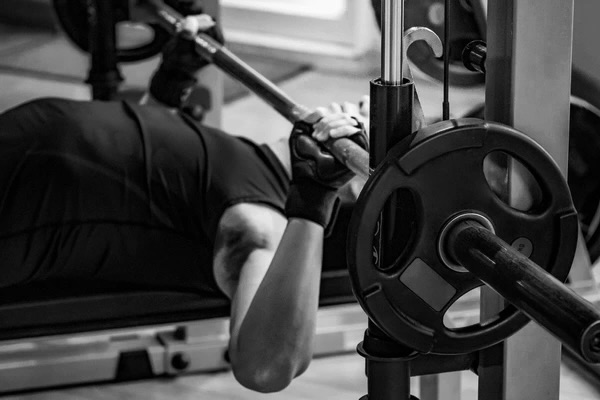
Bench press is one of the most popular lifts in the gym, and one of the movements most likely to cause shoulder pain when it's not performed correctly.
If you love benching but your shoulder has started to ache, pinch, or feel irritated, you’re not alone. Most lifters experience this at some point, and the causes are almost always fixable.
Shoulder pain during bench press typically comes from one of two issues:
-
Mobility limitations → especially restricted internal rotation
-
Strength or warm-up issues → poor prep leads to poor mechanics
Let’s break down exactly how to test your mobility, how to fix it, and how to warm up properly so you can bench without pain.
Why Your Shoulder Hurts When You Bench
Shoulder pain while bench pressing usually stems from one core issue:
You don’t have enough internal rotation at the shoulder to safely get into a bench press position.
When this range is limited, your humerus (upper arm bone) doesn’t sit cleanly in the shoulder joint.
That means the rotator cuff gets pinched, irritated, and overloaded every time you lower the bar.
In other words:
The problem isn't your bench technique. It's the mobility you’re bringing into the lift.
Step 1: Check Your Shoulder Mobility
-
Stand next to a wall.
-
Raise your elbow to shoulder height.
-
Place your forearm and wrist (watch area) on the wall.
-
Gently push downward.
-
Compare both sides.
If the painful side is noticeably stiffer or doesn’t rotate as far, you’ve found your primary problem.
This lack of internal rotation is a leading cause of:
-
Front-shoulder pinching
-
Biceps tendon irritation
-
Pec tightness
-
Rotator cuff overload
-
Pain in the bottom phase of the bench press
Luckily, it’s straightforward to fix. Let's show you how.
Step 2: Restore Shoulder Internal Rotation With a Lacrosse Ball
One of the simplest and most effective ways to improve shoulder mobility before benching:
lacrosse ball soft tissue work to the back of the shoulder.
How to Do It
-
Stand against a wall.
-
Place a lacrosse ball on the back of your shoulder — where your knuckles would land if you reached behind you.
-
Roll slowly through the tissue.
-
Spend 3–5 minutes hunting for tender spots.
When to Do It
Immediately before you bench.
Not the night before.
Not hours before.
Right before you load the bar.
This improves tissue glide and reduces irritation when you get into that bottom bench position.
Step 3: Warm Up Properly
Skipping a proper warm-up is one of the fastest ways to irritate your shoulder, especially if you bench heavy or with high volume.
The fix?
A simple but incredibly effective banded high-row warm-up.
How to Do It
-
Loop a band at head height.
-
Pull toward your face with:
-
Elbows high
-
Hands high
-
Shoulders pulled down and back
-
-
Perform 20–30 slow reps.
This drill activates:
-
Upper back muscles
-
Rotator cuff
-
Scapular stabilizers
Once these are awake, your bench mechanics improve immediately.
Step 4: Bench With a Shoulder-Safe Setup
With your mobility and warm-up dialed in, make sure your setup supports your shoulder.
Key Technique Tips:
-
Squeeze your shoulder blades together and keep them locked.
-
Keep elbows at a 45–60° angle — not flared.
-
Lower the bar to mid-to-lower chest.
-
Engage your lats to guide the descent.
These small adjustments protect the shoulder joint and reduce irritation.
Why This Works
Pain-free benching comes down to three repeatable elements:
-
Good mobility
-
Proper warm-up
-
Stable mechanics
Together, these can eliminate 80% of bench-related shoulder pain.
When the shoulder can internally rotate, stabilize, and move under control, strength improves and pain decreases.
Watch the Full Video
See the full demonstration here:
Ready to Bench Pain-Free Again?
If shoulder pain keeps slowing you down in the gym, we can help you fix the root cause and rebuild strength the right way.
📞 Call/Text: (925) 397-0399
📧 Email: Abigail@BaxPerformanceRehab.com
Comments